This week, Governor Ron DeSantis vetoed HB 145, a bipartisan bill that passed the Florida Senate unanimously and cleared the House of Representatives by a vote of 108–1.
For the first time in sixteen years, the Florida Legislature voted to raise the state’s sovereign immunity caps — the limits on what Floridians can recover when they are injured by government negligence.
HB 145 would have increased those recovery limits from $200,000 to $350,000 per person and from $300,000 to $500,000 per incident, effective October 1, 2026.
Despite the bill’s overwhelming bipartisan support, Governor DeSantis vetoed it, siding with lobbyists for insurance companies and government entities who urged him to reject the bill to avoid increased liability insurance payouts.
With the stroke of a pen, injured Floridians and their families are left exactly where they have been since 2010: subject to some of the most restrictive government liability caps in the country, with no adjustment for inflation.
How Sovereign Immunity Affects Floridians Injured by Government Negligence
Sovereign immunity is a doctrine inherited from English common law, rooted in the maxim that “the king can do no wrong.” In Florida, it means the state, its agencies, counties, cities, school districts, and public hospitals cannot be sued without the state’s consent.
Under Florida Statutes §768.28, a person injured by government negligence may sue the responsible government entity, but the amount the injured person can actually collect is capped. No matter how much a jury awards, the government cannot be compelled to pay more than $200,000 to any one person or more than $300,000 total for any single incident.
A judgment can be entered above those amounts, but the plaintiff receives full compensation only if the Legislature passes a “claims bill” or “relief act” authorizing payment. That process is arduous, political, and slow. Victims often wait years, carrying their claims bills through session after session with no guarantee of success.
In the 2026 Regular Session, only six of fourteen claims bills made it through both chambers. Recent years have seen passage rates as low as ten percent.
For a family facing the costs of a life-changing injury, the $200,000 cap can be devastating. The claims bill process forces them to plead their case to lawmakers for a chance at the money they need to pay their medical bills.
The plaintiffs in these cases have already won at trial, proving under Florida law that they deserve to be compensated. The sovereign immunity caps place an additional hurdle between them and justice.
To add insult to injury, the caps were last updated in 2010. They have remained frozen for sixteen years while inflation and the cost of living have climbed.
What Would HB 145 Have Done?
HB 145 was sponsored by Rep. Fiona McFarland, a Sarasota Republican who has championed sovereign immunity reform for several sessions.
As originally passed by the House in January, the bill would have raised the caps to $500,000 per person and $1 million per incident, with further increases to $600,000 and $1.2 million by 2031. Earlier versions also would have allowed government entities to settle claims above the caps without legislative approval and barred insurance policies from conditioning payment on the passage of a claims bill.
The Senate scaled the measure back. Sen. Jason Brodeur, a Lake Mary Republican, filed the Senate companion, SB 1366 (co-introduced by Sen. Darryl Rouson, a St. Petersburg Democrat), which the Rules Committee revised into a committee substitute, CS/SB 1366. When the Senate took up the House bill in March, Brodeur offered a strike-all amendment carrying that language, reducing the increases to $350,000 per person and $500,000 per incident and dropping the provisions that would have expanded settlement authority above the caps. The amended bill passed the Senate 36–0 on March 10, and the House concurred on March 12, sending it to the Governor’s desk.
Even in its reduced form, the final bill represented meaningful progress for victims. Beyond the 75% increase in the caps, it would have accelerated the presuit process. An agency’s failure to resolve a claim would have been deemed a denial after four months instead of six with the statute of limitations tolled during the agency’s review. (Reduced to 90 days in medical malpractice and wrongful death cases.)
The bill also would have eliminated the statute of limitations for claims arising from the sexual assault of a child under sixteen. And it would have aligned the time limit for negligence claims against the government with the two-year statute of limitations that applies to claims against other defendants.
As Rep. McFarland framed the issue on the House floor, “If you or I or one of our loved ones is hit by a truck, we have to pay attention to what’s on the side of that truck.” Whether a family can be made whole after a truck accident should not depend on whether the vehicle bears a corporate logo or a government seal.
She also pointed to a practical reality familiar to anyone who has tried to find representation for a sovereign immunity case. When recovery is limited to $200,000, many valid cases become economically impossible to bring. Raising the cap opens the courthouse doors to victims who would otherwise be turned away.
Why DeSantis Vetoed HB 145
HB 145 drew fierce opposition from local governments and insurance companies. More than 240 lobbyists registered on the legislation, and eleven organizations calling themselves the “Sovereign Immunity Coalition” lobbied the Legislature to vote against it — and then urged the Governor to veto it — citing fiscal pressure on cities, counties, school districts, and public hospitals.
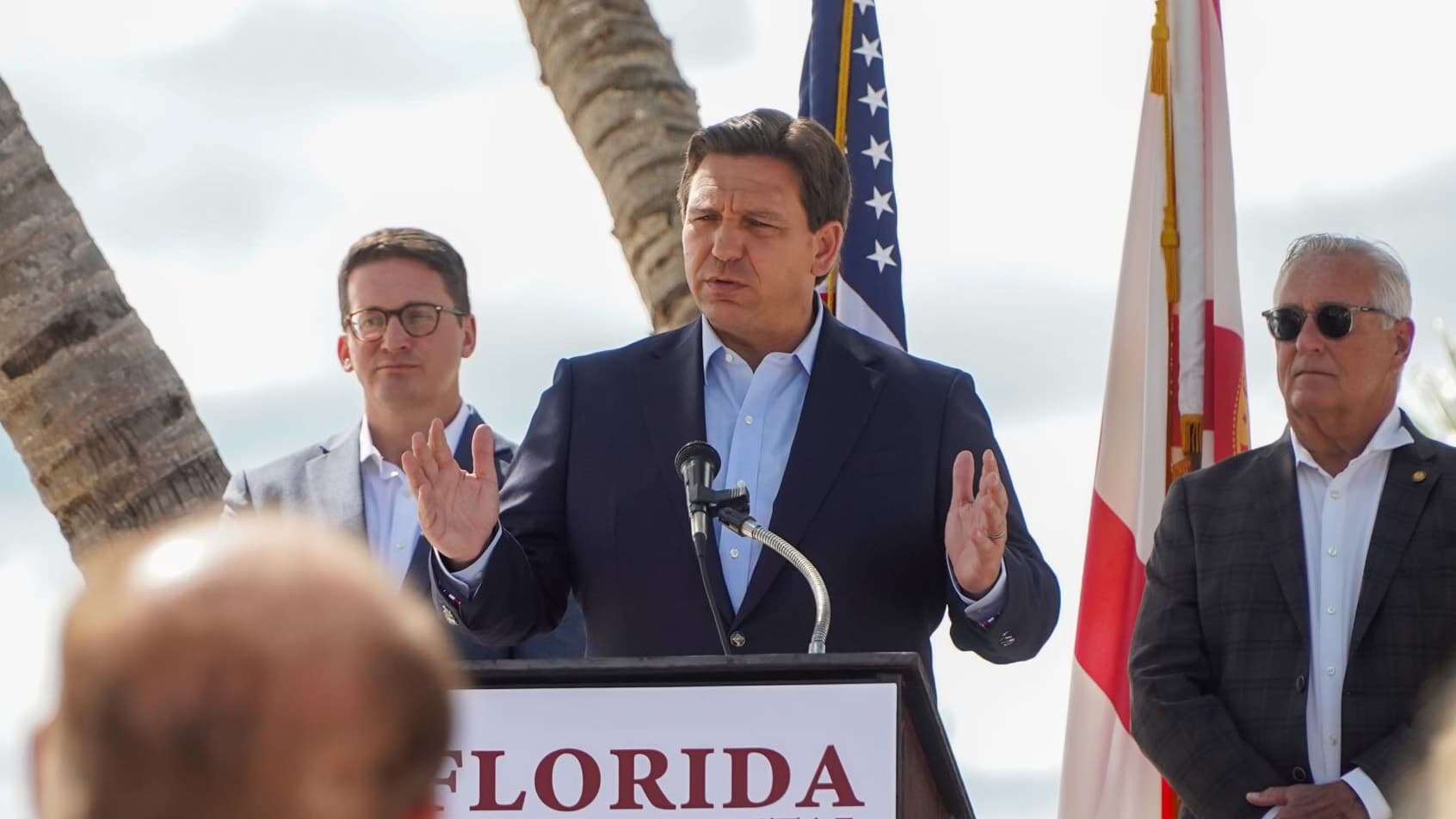
Governor DeSantis gave in to the lobbyists, disregarding the Legislature’s broad bipartisan support. Announcing his decision at the Tampa press conference where he signed the state budget, DeSantis defended the existing cap-and-claims-bill structure, saying, “When you raise the cap, you are going to generate more unmeritorious lawsuits.” He pointed to the six claims bills he signed this year as evidence that the current system works — leaving unmentioned the eight claims bills that failed to reach his desk.
The Governor’s reasoning doesn’t hold up to scrutiny. HB 145 did not expand who can sue the government. Plaintiffs would still have had to meet the same negligence standards and presuit requirements to pursue a claim, and caps would still have applied. Plaintiffs awarded damages above the new caps would still have needed to go through the claims bill process. HB 145 simply provided a modest increase in what a victim can actually collect after the government’s negligence has been proven at trial.
What Happens Now
The veto erases the reforms HB 145 would have delivered. Florida’s sovereign immunity caps remain $200,000 per person and $300,000 per incident, recoveries above those amounts still require an act of the Legislature, and nothing in the veto changes an injured person’s right to pursue a claim within those limits.
The fight is not over. McFarland has pursued this reform across multiple sessions, the policy enjoys overwhelming bipartisan support in both chambers, and the 2027 Legislative Session will convene with a new governor in office. Whether the sponsors re-file the bill remains to be seen, but the coalition behind it is unlikely to walk away. Including the Florida Justice Association, which has long called the current caps inadequate and the claims bill process a politicization of victims’ pain.
In the meantime, the caps make one thing more important than ever for victims of government negligence: experienced legal representation. Claims against government entities involve strict presuit notice requirements, short deadlines, and procedural traps that can extinguish a valid claim before it begins, and recovering damages beyond the sovereign immunity caps requires attorneys who know the terrain.
Swope, Rodante, Newsome & Steinberg has decades of experience representing catastrophically injured people and their families in the most complex cases, including claims against government entities, and we will continue to fight for legislation that lets injured Floridians recover the full compensation they deserve.
This article is provided for general informational purposes and does not constitute legal advice. If you or a loved one has been injured, contact us for a free consultation.