If you’ve been injured in an accident in Florida, you have a limited amount of time to file a lawsuit and the amount of time has recently changed. Missing the deadline by even one day can mean losing your right to compensation permanently, no matter how strong your case is.
How Long Do You Have to File a Personal Injury Lawsuit in Florida?
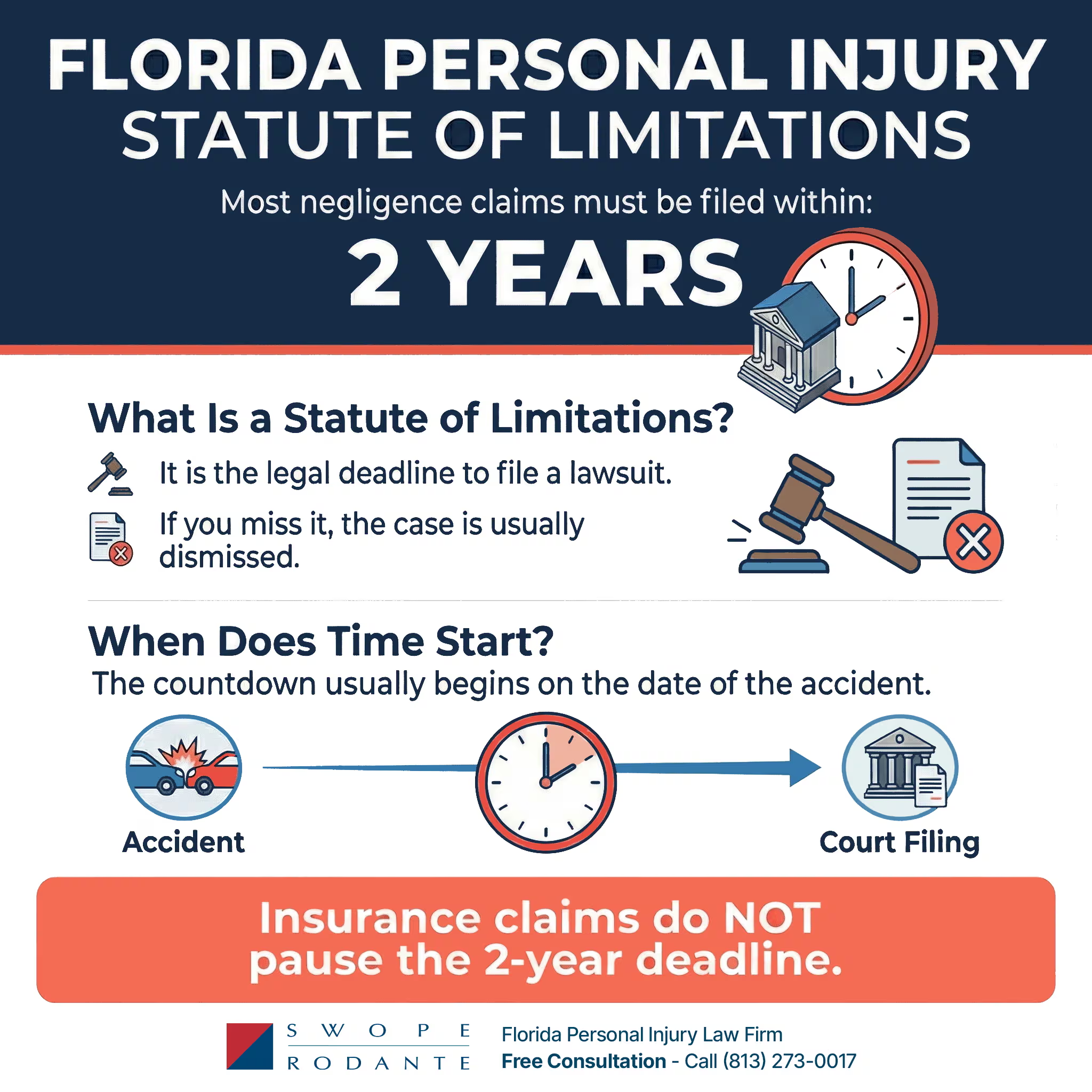 The statute of limitations for personal injury claims in Florida is two years from the date of the injury. For accidents that took place before March 24 2023, the statute of limitations is four years.
This is governed by Florida Statute § 95.11(5)(a), as amended by House Bill 837, the sweeping tort reform law signed by Governor DeSantis on March 24, 2023. Before this law took effect, Florida gave personal injury victims four years to file a negligence-based lawsuit. HB 837 cut that deadline in half.
The two-year clock starts on the date of the accident — not the date you discovered your injury, not the date you finished medical treatment, and not the date your insurance claim was resolved. In most cases, the filing deadline is exactly two years from the day the incident occurred.
If you do not file a lawsuit within this window, the court will almost certainly dismiss your case. There is no extension for having a good reason, being unaware of the deadline, or still being in the process of negotiating with an insurance company.
What Changed Under HB 837?
House Bill 837 was the most significant tort reform legislation Florida has passed in decades. The statute of limitations reduction was just one of several changes that directly affect personal injury victims. Understanding the full scope of HB 837 is important because these changes work together to shift the legal landscape in favor of insurers and defendants.
Statute of limitations reduced from four years to two years. This applies to all negligence-based personal injury claims — car accidents, truck accidents, motorcycle accidents, slip and falls, premises liability, and most other injury cases arising from someone else’s negligence. The change applies only to claims that accrued (meaning the injury occurred) on or after March 24, 2023.
Shift from pure to modified comparative negligence. Before HB 837, Florida followed a “pure” comparative negligence system, meaning you could recover damages even if you were mostly at fault for your own injuries — your recovery would simply be reduced by your percentage of fault. Under the new “modified” system, if you are found to be more than 50% at fault for your injuries, you cannot recover anything. This change does not apply to medical malpractice cases, which still operate under the prior pure comparative negligence standard.
Changes to how medical expenses are proven. HB 837 altered the evidence plaintiffs can use to demonstrate past and future medical costs, creating new rules about what amounts can be presented to a jury. This affects the potential value of personal injury claims.
New standards for insurance bad faith claims. The law made it harder for policyholders to bring bad faith lawsuits against their own insurers, requiring written notice and a 90-day cure period before litigation can proceed in most cases.
Taken together, these changes make it more urgent than ever for Florida injury victims to act quickly and seek experienced legal representation early in the process.
Which Deadline Applies to Your Case?
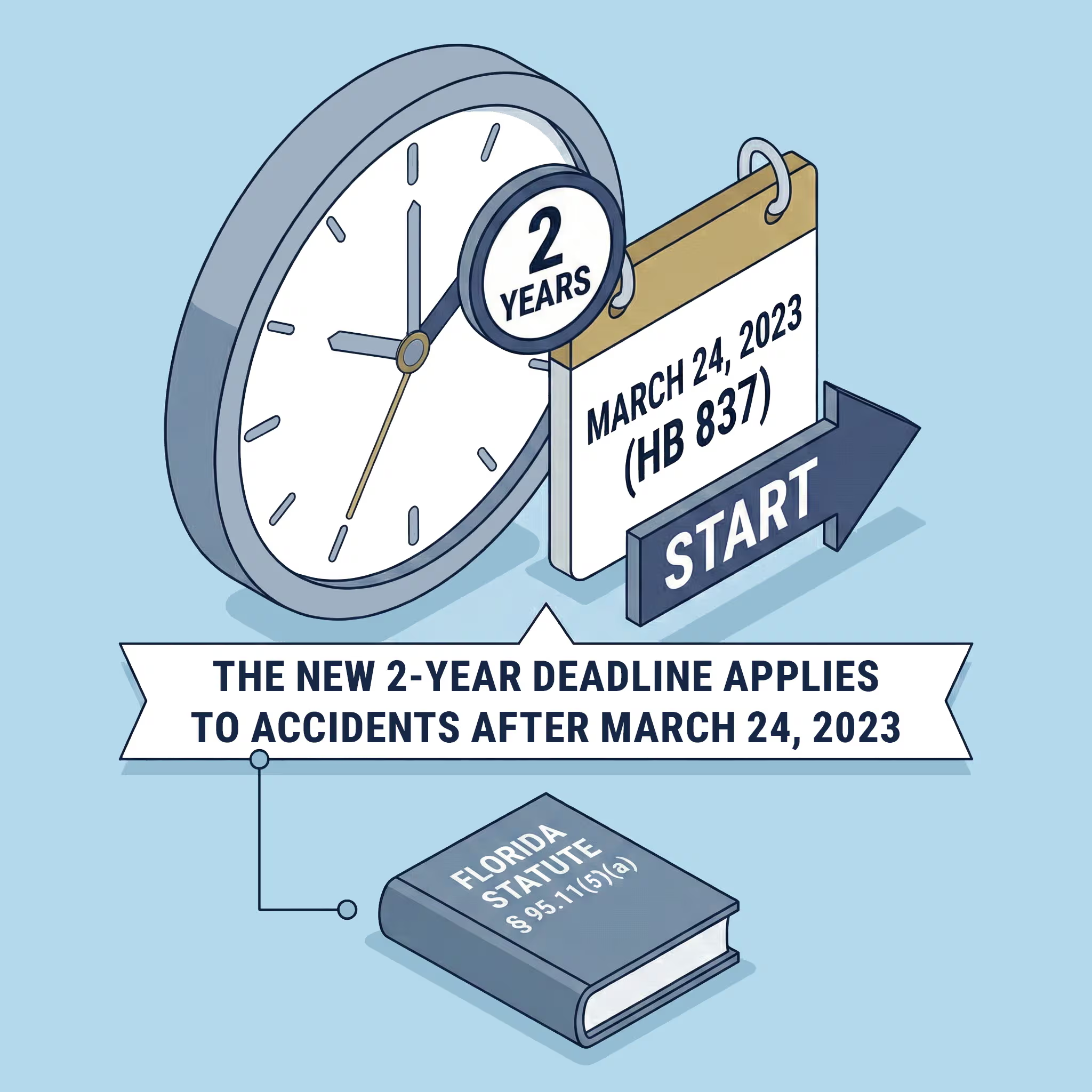 The statute of limitations that applies to your claim depends on the date of your accident:
Accident before March 24, 2023: The four-year statute of limitations applies. For example, if your accident occurred on January 15, 2023, your deadline to file a lawsuit is January 15, 2027.
Accident on or after March 24, 2023: The two-year statute of limitations applies. For example, if your accident occurred on June 1, 2024, your deadline to file is June 1, 2026.
The law is not retroactive. The new two-year deadline applies only to causes of action that accrued after the law’s effective date. If you are unsure which deadline applies to your situation, consult an attorney immediately — guessing wrong could cost your case.
Statutes of Limitations for Other Types of Claims in Florida
Not all personal injury claims follow the same timeline. Here are the current deadlines for the most common types of claims:
General negligence (car accidents, slip and falls, premises liability): Two years from the date of injury, for claims accruing on or after March 24, 2023.
Wrongful death: Two years from the date of death. This deadline was already two years before HB 837 and did not change. The clock starts on the date of death, not the date of the incident that caused the death. Wrongful death claims must be filed by the personal representative of the deceased person’s estate.
Medical malpractice: Two years from when the patient knew or should have known about the injury, with an absolute outside limit (statute of repose) of four years from the date of the incident. There is a 90-day pre-suit notice requirement that must be completed before filing, and the statute of limitations is tolled during this pre-suit investigation period. Learn more about medical malpractice in Florida.
Product liability: Four years from the date of injury for strict liability claims. However, if the claim is based on negligence, the two-year statute of limitations may apply for incidents occurring after March 24, 2023. SRPA handles product liability cases involving defective vehicles, medical devices, and consumer products.
Claims against government entities: Florida Statute § 768.28 requires written notice to the government agency within three years of the incident (two for wrongful death). However, the underlying statute of limitations still applies, and you cannot file a lawsuit until the agency has had an opportunity to investigate and respond to the claim. These overlapping deadlines create traps — satisfying the notice requirement does not extend the filing deadline.
Exceptions That May Extend the Deadline
The two-year statute of limitations is strict, but Florida law recognizes a small number of exceptions that may pause (“toll”) the clock in specific circumstances:
Minors. If the injured person is under 18, the statute of limitations may be tolled until they reach age 18. However, this extension may not apply depending on the type of case and other factors. If you were injured as a child, discuss your case with an attorney as soon as possible to determine whether the statute of limitations could be extended for your case.
Legal incapacity. If the injured person is mentally incapacitated — for example, in a coma, suffering from severe cognitive disability, or otherwise unable to manage their own affairs — the statute may be tolled during the period of incapacity. This situation can arise in cases involving severe traumatic brain injuries or anoxic brain injuries. Courts require strong evidence that the person was genuinely unable to act, and a legal guardian’s failure to file may not be excused.
Discovery rule. In limited circumstances, the statute of limitations may begin when the injury is discovered or should have been discovered, rather than when it occurred. This exception is most commonly applied in medical malpractice and latent injury cases where the harm was not immediately apparent. It does not apply to most car accident claims, where the injury and its cause are typically known at the time of the crash.
Defendant’s absence or evasion. If the person who caused your injury leaves the state of Florida, conceals their identity, or takes deliberate steps to evade service of process, the statute of limitations may be tolled during the period of absence or evasion. This exception requires clear evidence of intentional evasion.
Fraud or concealment. If the defendant actively concealed facts that prevented you from discovering your injury or its cause, the statute may be tolled until the concealment is or should have been discovered.
These exceptions are narrow, difficult to prove, and courts apply them skeptically. You should never assume an exception will save a late filing. The safest course is always to file within the standard deadline.
Common Mistakes That Cause People to Miss the Statute of Limitations Deadline
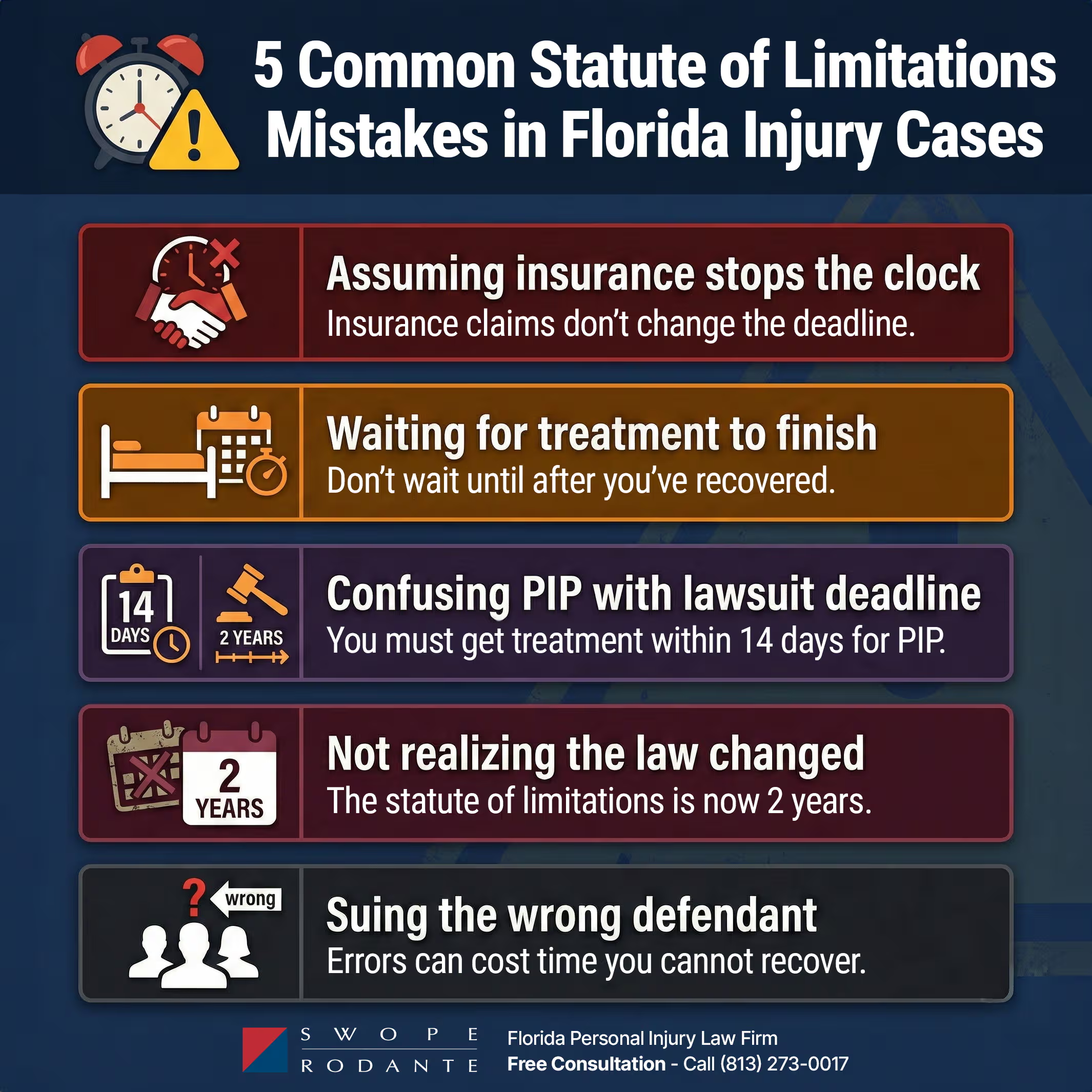 Assuming the insurance process stops the clock. Filing an insurance claim, negotiating with an adjuster, or even reaching a partial settlement does not pause or extend the statute of limitations. The two-year deadline runs independently of any insurance activity. If negotiations break down at 23 months, you have one month — not two more years — to file a lawsuit. Understanding how to deal with insurance companies and their tactics is essential.
Waiting for treatment to finish before consulting a lawyer. Many injury victims want to complete their medical treatment before exploring their legal options. While this is understandable, it can be dangerous. Serious injuries may require years of treatment, and by the time you’ve recovered enough to think about legal action, the deadline may have already passed. You do not need to be finished with treatment to file a lawsuit.
Confusing the lawsuit deadline with the PIP deadline. Florida’s PIP insurance requires you to seek medical treatment within 14 days of an accident, but that is a separate requirement from the statute of limitations. Meeting the 14-day PIP rule does not affect your two-year lawsuit deadline, and vice versa. Both deadlines must be independently satisfied.
Not realizing the law changed. Many Floridians still believe they have four years to file a personal injury lawsuit. If your accident occurred after March 24, 2023, you do not. The two-year deadline is now the law, and courts will enforce it without exception.
Failing to identify the correct defendant. In some cases, determining who is legally responsible for your injuries takes time — particularly in truck accidents, product liability claims, or cases involving government entities. If you spend too long investigating before filing, the deadline may expire. An experienced attorney can file a lawsuit to preserve your rights while the investigation continues.
Why the Shortened Deadline Makes Early Legal Consultation Critical
Under the old four-year statute, there was a reasonable cushion of time for injury victims to recover, assess their situation, and explore their options. The new two-year deadline eliminates most of that cushion.
Consider what happens in a typical serious car accident case: the victim is hospitalized, undergoes surgery, spends weeks or months in rehabilitation, deals with PIP claims and insurance adjusters, tries to return to work, and eventually realizes their injuries are permanent or their insurance settlement is inadequate. Under the old law, there was still time to file a lawsuit. Under the new law, the two-year deadline may arrive while the victim is still in the middle of this process.
Early consultation with an attorney does not commit you to filing a lawsuit. It does ensure that someone is monitoring deadlines, preserving evidence, and protecting your options while you focus on recovery. Evidence degrades over time — witnesses forget details, surveillance footage is overwritten, medical records become harder to obtain. The sooner an attorney is involved, the stronger your case will be if litigation becomes necessary.
Review what to do after a car accident in Florida for a complete guide to protecting your rights from the moment the accident occurs.
Frequently Asked Questions
Does the two-year deadline apply to all personal injury cases? It applies to negligence-based claims accruing on or after March 24, 2023. Medical malpractice, wrongful death, and product liability cases have their own specific deadlines. If you are unsure which statute applies, consult an attorney.
Can I still file a claim with the insurance company after two years? The statute of limitations governs lawsuits, not insurance claims. However, your ability to negotiate a meaningful insurance settlement depends largely on the threat of litigation. Once the statute expires, the insurance company knows you can no longer sue, which eliminates most of your leverage.
What if my symptoms didn’t appear until after the accident? For most car accident claims, the statute of limitations begins on the date of the crash, not the date symptoms appear. This is one reason why it is critical to seek medical treatment immediately after any accident, even if you feel fine. The discovery rule may apply in rare cases, but it is not a reliable safety net for delayed symptom onset in typical accident claims.
Does filing a PIP claim extend my statute of limitations? No. The PIP claims process and the lawsuit filing deadline are completely separate. Settling your PIP claim has no effect on the two-year deadline for filing a personal injury lawsuit.
What if the at-fault driver’s insurance company is still negotiating with me? Ongoing negotiations do not toll the statute of limitations. If your deadline is approaching and negotiations are still unresolved, you must file a lawsuit to preserve your rights. Your attorney can continue negotiating even after a lawsuit is filed, and many cases settle after litigation begins. Learn more about the litigation phase of a personal injury claim.
Contact Swope, Rodante P.A.
The shortened statute of limitations under HB 837 means Florida accident victims have less time than ever to protect their rights. If you’ve been injured in an accident, don’t wait to find out whether the deadline applies to your case.
At Swope, Rodante P.A., we have represented Florida injury victims for decades, and we understand the urgency the new law creates. Contact us for a free case evaluation. We work on a contingency fee basis — you pay nothing unless we recover compensation on your behalf.