A hit-and-run accident occurs when a driver causes or is involved in a crash and then leaves the scene without stopping to exchange information or render aid. Florida law requires all drivers involved in an accident to stop. Leaving the scene is a crime, and victims who are left behind have legal options for recovering compensation even when the at-fault driver is never identified.
If you were injured in a hit-and-run in Tampa, your own insurance policy and an experienced hit-and-run accident lawyer can help you get the compensation you need. Call (813) 273-0017 for a free consultation.
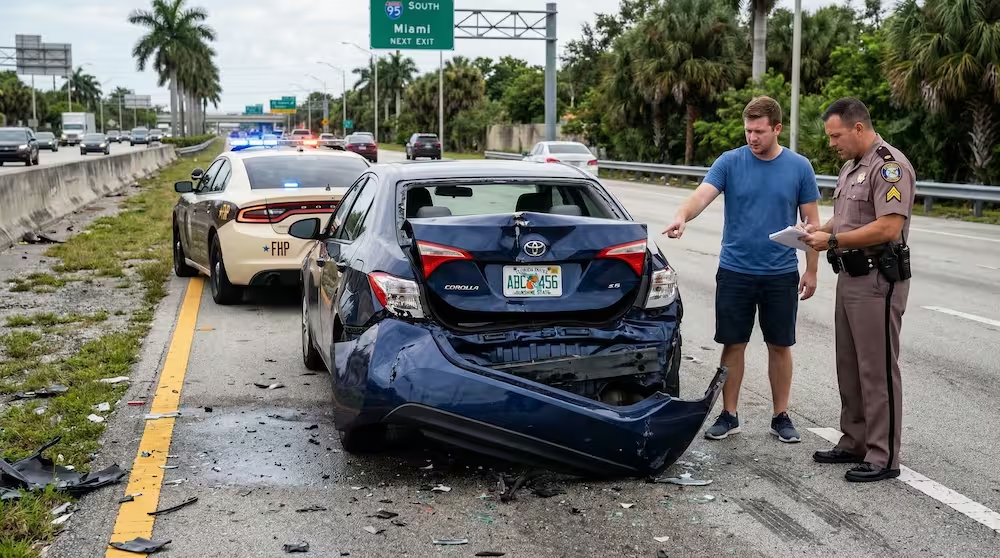 Florida Hit-and-Run Laws
Florida Statute 316.061 and 316.062 require any driver involved in a crash to stop immediately, provide identification and insurance information, and render reasonable assistance to anyone who is injured. Leaving the scene of an accident is a criminal offense under Florida Statute 316.027, and the penalties increase with the severity of the crash.
Criminal Penalties for Hit-and-Run in Florida
- Crash involving property damage only – Leaving the scene is a second-degree misdemeanor punishable by up to 60 days in jail and a $500 fine.
- Crash involving injuries – Leaving the scene when someone is injured is a third-degree felony punishable by up to 5 years in prison and a $5,000 fine.
- Crash involving serious bodily injury – Leaving the scene when injuries are serious is a second-degree felony punishable by up to 15 years in prison.
- Crash involving death – Leaving the scene of a fatal crash is a first-degree felony punishable by up to 30 years in prison and a mandatory minimum sentence of 4 years.
Florida also imposes a mandatory license revocation of at least 3 years for leaving the scene of a crash involving injury or death.
The Aaron Cohen Life Protection Act
Florida’s Aaron Cohen Life Protection Act increased penalties for hit-and-run crashes involving death. The law, which amended Florida Statute 316.027 and took effect July 1, 2014, imposes a mandatory minimum sentence of 4 years in prison for drivers who leave the scene of a fatal crash.
How Victims Recover Compensation After a Hit-and-Run
When the at-fault driver flees and cannot be identified, traditional liability claims against that driver are not possible. However, victims have other options.
PIP Coverage
Your own Personal Injury Protection (PIP) insurance covers up to $10,000 in medical expenses and lost wages regardless of fault. PIP benefits are available after a hit-and-run just as they are after any other accident. Remember the 14-day rule: you must seek medical treatment within 14 days of the accident to qualify for PIP benefits.
Uninsured Motorist (UM) Coverage
Uninsured motorist coverage is the most important tool for hit-and-run victims. UM coverage treats a hit-and-run driver as an uninsured motorist, allowing you to make a claim against your own insurance company for damages beyond what PIP covers.
UM coverage can compensate you for:
- Medical expenses beyond PIP limits
- Lost wages beyond PIP limits
- Pain and suffering
- Other non-economic damages
Florida does not require UM coverage, but insurers must offer it. If you declined UM coverage when you purchased your policy, you may not have this protection. This is one of the most important coverages you can carry precisely because hit-and-runs and encounters with uninsured drivers are common.
Stacking UM Coverage
If you have multiple vehicles on your policy, Florida law allows you to “stack” your UM coverage. Stacking means combining the UM limits from each vehicle on your policy to increase the total coverage available. For example, if you have $100,000 in UM coverage and two vehicles on your policy, stacking may give you $200,000 in available coverage.
If the Hit-and-Run Driver Is Later Identified
Law enforcement sometimes identifies hit-and-run drivers through witness descriptions, surveillance footage, debris left at the scene, or tips from the public. If the driver is found, you can pursue a liability claim against that driver and their insurance in addition to any UM claim.
Steps to Take After a Hit-and-Run Accident
Acting quickly after a hit-and-run is critical for both your health and your legal case.
- Call 911 immediately. Report the hit-and-run to police. A police report is essential for your UM claim and may help identify the fleeing driver.
- Note any details about the fleeing vehicle. Try to remember the make, model, color, license plate (even a partial plate), and direction of travel. Any detail helps.
- Look for witnesses. Other drivers, pedestrians, and nearby business employees may have seen the crash or the vehicle fleeing. Get their contact information.
- Check for surveillance cameras. Many businesses, traffic cameras, and residential doorbell cameras capture nearby roadways. Note any cameras in the area so your attorney can request footage before it is overwritten.
- Seek medical attention. Get evaluated promptly. The 14-day rule for PIP applies, and prompt treatment also documents your injuries.
- Document your injuries and vehicle damage. Take photographs of everything.
- Contact your insurance company. Report the accident and begin the UM claim process. Be factual in your report but do not give a recorded statement without consulting an attorney.
- Consult a personal injury attorney. UM claims are made against your own insurer, which has its own interests. An attorney ensures you are treated fairly.
Challenges in Hit-and-Run Cases
Hit-and-run cases present unique difficulties.
Proving the Crash Happened
Insurance companies sometimes question whether a hit-and-run actually occurred or suggest that the damage was caused by something else. Police reports, witness statements, physical evidence on your vehicle, and medical records linking your injuries to the crash all help establish that the hit-and-run happened as reported.
The Physical Contact Requirement
Some UM policies require physical contact between your vehicle and the unidentified vehicle. If a hit-and-run driver ran you off the road without actually touching your car, this requirement could be an issue. Florida courts have addressed this, and an attorney can help navigate these policy provisions.
Dealing With Your Own Insurance Company
UM claims put you in a unique position: you are filing a claim against your own insurer. While your insurance company owes you good faith, its financial interest is to minimize the payout. Insurers may dispute the severity of your injuries, question your treatment, or argue that pre-existing conditions caused your symptoms.
Having an attorney handle your UM claim levels the playing field. Your attorney can negotiate with the insurer, provide supporting medical documentation, and file a lawsuit against your own insurance company if it refuses to pay a fair amount.
Common Injuries in Hit-and-Run Accidents
Hit-and-run crashes can range from minor fender benders to catastrophic collisions. Pedestrians and cyclists are particularly vulnerable because they have no vehicle protection.
- Whiplash and soft tissue injuries – Common in rear-end hit-and-runs
- Broken bones – Especially in pedestrian and bicycle hit-and-runs
- Traumatic brain injuries – Pedestrians struck by fleeing vehicles frequently suffer head injuries
- Spinal injuries – Back and neck damage from the force of impact
- Lacerations and road rash – Cyclists and pedestrians may be dragged or thrown
- Emotional trauma – The combination of being injured and having the responsible driver flee can cause significant anxiety and PTSD
Frequently Asked Questions
Do I need UM coverage to make a claim after a hit-and-run?
UM coverage is the primary way to recover compensation beyond PIP when the at-fault driver is unidentified. Without it, your recovery options are limited to PIP benefits. If the driver is later identified, you can pursue a claim against their insurance.
What if the hit-and-run driver had no insurance?
If the driver is identified but has no insurance, your UM coverage applies just as it would if the driver remained unidentified.
How long do I have to file a hit-and-run claim in Florida?
The statute of limitations for personal injury is two years from the date of the accident for crashes occurring on or after March 24, 2023. For your UM claim, your policy may have additional notice requirements. Report the hit-and-run and begin the claims process as soon as possible.
Can I still recover money if I did not get the other driver’s license plate?
Yes. UM coverage does not require you to identify the other driver. You need evidence that a hit-and-run occurred, which can come from police reports, witness statements, physical evidence, and surveillance footage.
If you were injured in a hit-and-run accident in Tampa, Swope, Rodante, Newsome & Steinberg can help you file a UM claim and pursue every available source of compensation.
References
- Florida Statute § 316.027 – Crash Involving Death or Personal Injuries
- Florida Statute § 316.061 – Crashes Involving Damage to Vehicle or Property
- Florida Statute § 316.062 – Duty to Give Information and Render Aid
- Florida Statute § 95.11 – Limitations Other Than for the Recovery of Real Property (Statute of Limitations)