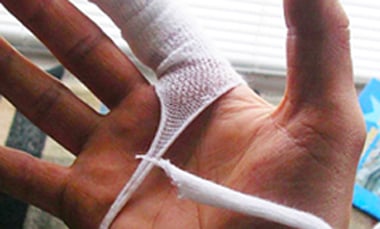
Accidents resulting in burn injuries are among the most painful experiences a person might have. Even minor burns can be tremendously painful and typically leave behind permanent scars. Personal injury claims associated with burns often represent victims who have been permanently disfigured as a result of another person’s negligence. In this article, we’ll explore the basic types of burns and common causes, as well as noting a few relevant statistics.
The 4 Classifications of Burn Injuries
A burn is defined as an injury (damage) to the flesh, tissue, or skin caused by excessive heat produce by flames, electricity, or friction. A burn can also be caused by chemicals (acid) or radiation. Based on the severity of the injury, all burns fall under one of four categories:
First-Degree Burn: A burn affecting only the superficial (outermost) layers of skin.
Texture: Redness, some irritation, no blistering
Sensation: Moderate “stinging” pain
Approximate Time to Heal: 5 to 10 days
Second-Degree Burn: Also known as partial-thickness burn, damaging some on the underlying skin/flesh layers
Texture: Redness with clear blisters, skin blanches (turns white) under pressure, damaged area feels moist
Sensation: Extremely painful, injury site remains very sensitive to touch, slight hot and cold
Approximate Time to Heal: 2-3 weeks
Third-Degree Burn: Also called a full-thickness burn, extends through all layers of the skin and damages tissue and nerve endings just beneath the skin
Texture: Stiff and white or brown, no blanching under pressure, leathery and dry
Sensation: Painless (nerve endings are damaged or destroyed)
Approximate Time to Heal: Several months, requires specialized burn treatment, full function may not be restored in some cases
Fourth-Degree Burn: A severe burn extending beyond the skin and into underlying fat, muscle, or bone
Texture: Black, charred, dry, crisp
Sensation: Painless (nerve endings are destroyed)
Approximate Time to Heal: Excision or amputation is typically needed. Function in the affected area is lost or severely limited. Death can result in severe cases.
Commons Causes of Burns in the US
- The leading cause of residential fires and related burn injuries is home-cooking appliances (oven range, wood-burning stove, hot plate, toaster oven). Note: the leading cause of residential fire fatalities are smoking related activities, such as smoking in bed (cigarettes, cigars).
- Fatalities and burns among children ages nine and below are most frequently caused by carelessness in the home, such as leaving candles, matches, or lighters accessible to children.
- The most common, less severe (first, second degree) burns are thermal or result from scalds and primarily affect children under age 14. Thermal burns result from curling irons, room heaters, and ovens, while scalds result from hot foods or liquids in areas where food is normally prepared or served.
Burn Treatment Statistics
A severe second degree burn or higher (third or fourth) may require hospitalization, multiple surgeries, and physical therapy. Even as severe burns are healing, treatment and therapy can be very painful and difficult. The following statistics include the most up-to-date statistics as compiled at the end of 2012, per the American Burn Association with respect to burn injury hospitalizations and related data:
- Burn injury victims currently in treatment: 450,000
- Fire / burn related death fatalities per year: 3,400
- Estimated annual burn injury hospitalizations: 40,000 (30,000 at burn treatment centers)
- Specific cause for admission (burn injuries from 2002-2011): Fire/flames-44%, Scalds-33%, Contact/Thermal-9%, Electrical-4%, Chemical-3%, Other-7%
Simple Tips for Burn Prevention
- People with children should start teaching kids about the dangers of fire and burns at an early age.
- Keep small kids away from hot stoves and don’t let them near hot objects such as curling irons.
- Do not leave any heating appliances (irons) unattended – remain in the room while the item is hot.
- Keep matches, candles, and lighters hidden, secured, and out of sight. Treat these items like a loaded gun. Keeping matches and lighters in a locked cabinet or drawer is highly advisable.
- Install and test smoke alarms regularly. Studies have proven that smoke alarms save lives. AS of 2012, only 75% of homes had at least one working smoke detector.
- Install at least one smoke alarm on each floor in the home. Each bedroom should also have its own smoke detector. Replace smoke alarm batteries twice each year…each time you change the clocks back or forward.
References:
Lucile Packard Children’s Hospital at Stanford