Traumatic Brain Injuries (TBI) result from some manner of force applied to the human head. Traumatic brain injury (TBI) is a nondegenerative insult or trauma to the brain from an external mechanical force, possibly leading to permanent or temporary impairment of cognitive, physical, and psychological functions. The definition of TBI is not always consistent and can vary according to specialties and circumstances. Often, the term brain injury is used synonymously with head injury, which may not be necessarily associated with neurological impairment.
Epidemiology and Statistics
Traumatic brain injury (TBI) is the leading cause of death in the US and Canada for individuals between the ages of 1 and 45. Many survivors live with significant disabilities, resulting in major socioeconomic impact as well. Rates of traumatic brain injuries are highest in the very young (age group zero to four years) and in adolescents and young adults (15 to 24 years); with yet another peak in frequency among older adults (age >65 years).
Approximately 78 percent of traumatic brain injury cases are treated in the emergency department only; 19 percent of patients require hospitalization, and 3 percent are fatal. Most cases treated in emergency departments occur in the very young (ages zero to four years), while hospitalization rates are highest in patients older than 65 years.
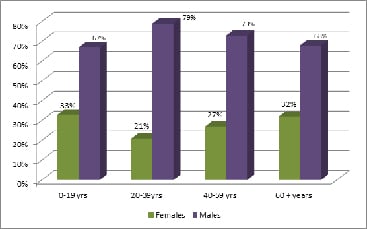
As with most traumatic injuries, the incidence of TBI is significantly higher in men compared to women, with about 60 percent of all TBI occurring in males. For severe traumatic brain injuries, the gender ratio is more pronounced, as about 75 to 80 percent occurs in males. Lower socioeconomic status and underlying psychiatric and cognitive disorders are also risk factors for brain injury.
- 5,300,000 people in the US, about 2% of the population, live with disabilities resulting from brain injuries
- Senior citizens ages 75 and older have the highest rates of TBI-related hospitalization and death over any other age group.
- Men who are heavy drinkers and/or have been homeless for a long period of time tend to have 400 times the number of head injuries when compared with the general population
- Direct medical costs and indirect costs (such as lost productivity) of TBI are at least $60 billion each year
Major Types of TBI
- Open TBI – This occurs when the injury results when the skull is broken, fragmented, or otherwise penetrated. An Open Traumatic Brain Injury is typically caused by an object that passes through the skull, thus causing damage along the path traveled.
- Closed TBI – A closed head injury takes place when an external force is applied to the skull, but the skull is not broken. Injury can occur when the brain (suspended in a protective layer of fluid, known as myelin) strikes the inside surface of the skull. A common example is when a bicycle rider crashes and strikes his/her head on pavement or concrete. A skull can also fracture, without penetration occurring, in a closed TBI.
10 Common Symptoms of TBI
In cases of an open injury, symptoms are normally visible. A wound, bleeding, and disfiguration of the skull can all be present. However, in most cases of a closed injury, below are 10 warning signs of potential TBI:
- Headache
- Dizziness
- Nausea / Vomiting
- Lack of Concentration
- Impaired Memory / Confusion
- Loss of Consciousness
- Speech Impairment / Slurring
- Trouble Focusing / Concentrating
- Blurry Vision
- Impulsiveness / Vocal Outbursts
References:
Mayo Clinic Website – Traumatic Brain Injury