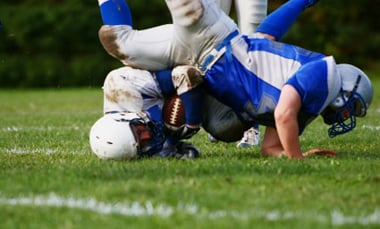
As of the end of February 2014, Riddell Helmets had been named as a defendant in as many as four separate consumer class actions in connection with an alleged false-advertising campaign regarding its Revolution helmet models. After a similar lawsuit was voluntarily dismissed back in 2012, several efforts on the matter resurfaced and received new life in the form of class actions.
In December 2013, the first of four class actions was filed in a Florida federal court. Shortly thereafter, two class actions (referred to as Aronson and Thiel) were filed in the state of New Jersey. In the last week of February, a fourth class action was filed in a California court. Some legal experts have expressed strong opinions that more lawsuits are very likely to be on the horizon.
Aronson Complaint – Class Action Alleging False Advertising
The Aronson complaint seeks to certify a nation-wide class of consumers that purchased the Riddell Revolution Helmet. The other three actions, taken together, seek to certify a state-wide class in California, Illinois, New Jersey and Florida.
With several overlapping putative class actions, which all share the same factual and legal issues, it is likely that Riddell will file a motion to consolidate all the cases by requesting that the Judicial Panel on Multidistrict Litigation create an MDL. The individual lawsuits target Riddell’s alleged false-marketing claims that were spurned by a 2003 University of Pittsburgh Medical Center study that stated:
“Athletes who wore the Riddell Revolution helmet were 31 percent less likely to suffer a concussion compared to athletes who wore traditional football helmets.”
According to information cited by the lawsuits, the 2003 study was scientifically flawed on multiple fronts. First, the co-author of the study, Dr. Joseph Maroon, stated that the study should not have been used as a marketing tool. Additionally, Dr. Cantu said the study:
“…suffers from a serious, if not fatal, methodological flaw….”
Third, Dr. Jeffrey Kutcher testified before Congress and said the study also had systematic flaws in data collection. Lastly, Dr. Cantu and Dr. Kutcher both agreed that the study was wrought with an “inherent conflict of interest.” Lastly, a study from the Cleveland Clinic concluded that modern day helmets – including the Revolution – were absolutely no more effective at preventing concussions than the leather helmets used in the early days of professional football.
Revolution Helmets also Marketed to Youth Players
The Riddell helmet class action lawsuit filed back in December alleges that the marketing misrepresentations were particularly heinous due to the fact that the “Revolution” advertising campaigns targeted youth football players. The suit alleges Revolution helmets were promoted as providing “premium” levels of protection for Pee-Wee and high school aged athletes who still faced nearly the same probability of concussion injuries as their peers who purchased similar, but less expensive helmets.
One of the other class action lawsuits against Riddell was brought on by former NCAA football players who allege that Riddell’s football helmet design is defective because the helmets failed to protect players against concussions, as marketing materials otherwise claimed or insinuated.
Since many consumers from a wide range of backgrounds feel that some of these companies have continued to engage in false marketing, many feel the only effective way to eliminate the problem is to take action through the civil-justice system.
References: