If you were partially at fault for an accident in Florida, you may still be able to recover compensation as long as your share of the blame is under 51%. Learn how Florida’s modified comparative negligence system affects your Florida personal injury claim.
What Is Comparative Negligence?
Comparative negligence is a legal principle used to assign fault among everyone involved in an accident. In most real-world accidents, more than one person shares some degree of responsibility. A driver may have been speeding, but the other driver may have failed to signal a lane change. A store may have left a floor wet, but the customer may have been looking at their phone instead of where they were walking.
Rather than declaring one person entirely at fault and the other entirely blameless, comparative negligence divides responsibility by percentage. Your compensation is then adjusted based on your share of the fault. If you are 30% at fault and your total damages are $100,000, your recovery is reduced to $70,000.
However, if you are found to be 51% or more at fault for the accident that caused your injuries, you may be barred from recovering any compensation. If your fault is 50% or less, you can still recover, but your compensation is reduced by your percentage of fault.
Florida’s New Modified Comparative Negligence System and 51% Rule
Florida used to follow a “pure comparative negligence” system. Under this system, an injured person could recover damages no matter how much fault they bore. Even someone who was 99% responsible for their own injuries could still recover the remaining 1% of their damages from the other party.
In 2023, Governor DeSantis signed House Bill 837 into law, replacing the pure system with a “modified comparative negligence” standard. The new rule, codified in Florida Statute § 768.81(6), states:
“In a negligence action to which this section applies, any party found to be greater than 50 percent at fault for his or her own harm may not recover any damages.”
Florida joined 23 other states that use this same 50% threshold model.
Examples of Florida’s Comparative Negligence Law
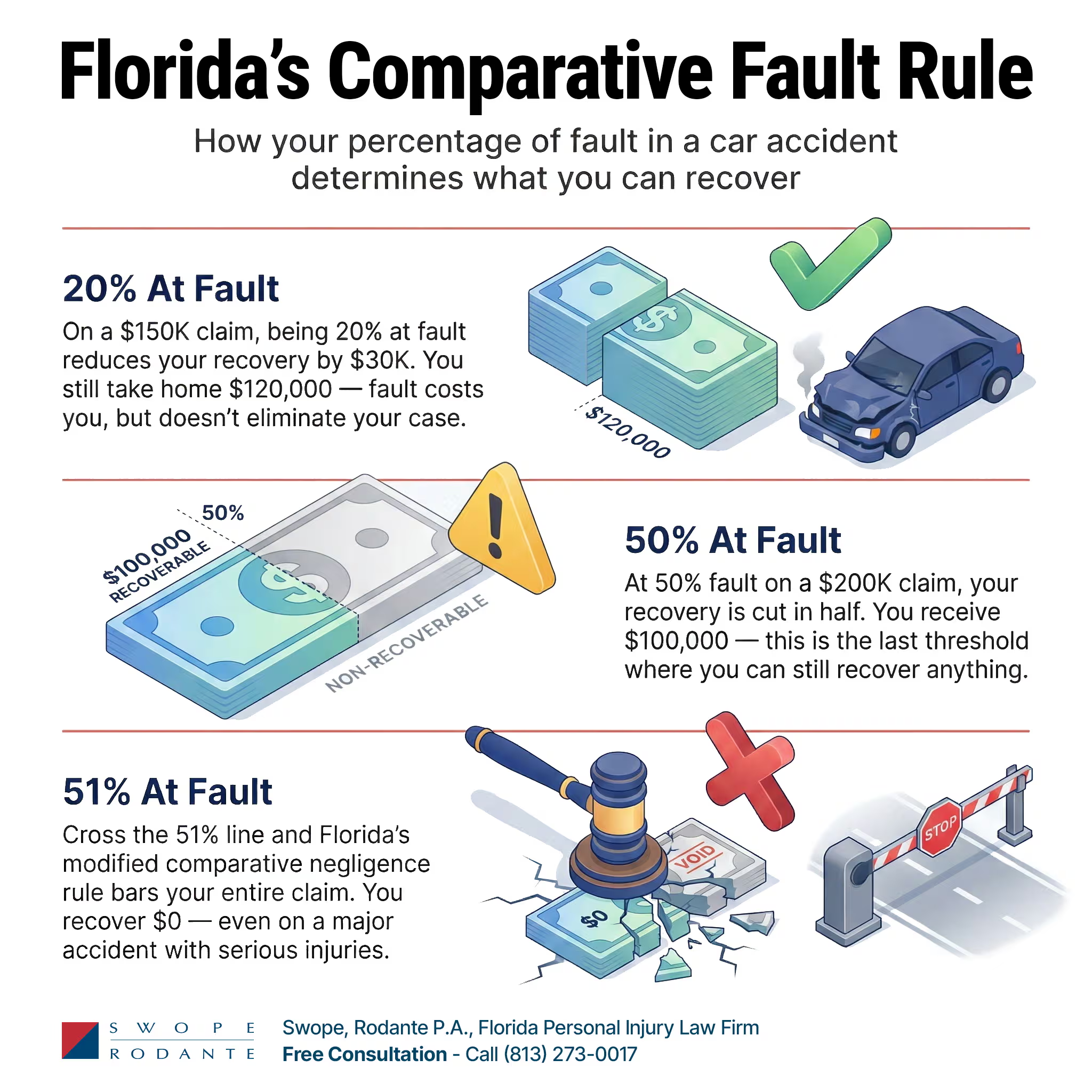 Here are examples of how Florida’s comparative fault rule applies in car accident cases:
Example 1: You are 20% at fault. You are rear-ended at an intersection, but investigators determine your brake lights were not functioning. The jury assigns you 20% of the fault and the other driver 80%. Your total damages are $150,000. Under comparative negligence, your recovery is reduced by 20%, so you receive $120,000.
Example 2: You are 50% at fault. You are involved in a T-bone collision. Evidence shows you were slightly exceeding the speed limit, while the other driver ran a stop sign. The jury assigns each of you 50% of the fault. Your total damages are $200,000. Because your fault does not exceed 50%, you can still recover — but your compensation is reduced by half, so you receive $100,000.
Example 3: You are 51% at fault. Same collision, but the jury determines you were traveling significantly over the speed limit and assigns you 51% of the fault. Your total damages are the same $200,000. Under the modified comparative negligence rule, you recover nothing. The one-percentage-point difference between 50% and 51% cost you your entire claim.
This cliff effect is when a small shift in fault allocation eliminates compensation entirely. It is the most significant practical consequence of the law change.
The Medical Malpractice Exception
The new modified comparative negligence standard does not apply to medical malpractice cases. Florida Statute § 768.81(6) explicitly exempts “action[s] for damages for personal injury or wrongful death arising out of medical negligence pursuant to chapter 766.”
This means that if you are injured due to a healthcare provider’s negligence, the old pure comparative negligence standard still applies. Even if you are found to be more than 50% at fault — for example, by failing to follow your doctor’s instructions or delaying treatment — you can still recover a proportional share of your damages. Learn more about medical malpractice claims in Florida.
This exception is limited to medical negligence claims. All other types of personal injury cases — car accidents, truck accidents, motorcycle crashes, slip and falls, premises liability, product liability, and wrongful death claims not arising from medical negligence — are subject to the new 51% bar.
How Insurance Companies Use the 51% Rule Against You
The shift to modified comparative negligence has fundamentally changed how insurance companies approach personal injury claims in Florida. Under the old pure system, fault allocation was a matter of degree — it affected how much you recovered, not whether you recovered at all. Under the new system, pushing your fault above 50% eliminates the insurer’s obligation entirely.
This has created powerful new incentives for insurance companies to aggressively investigate your conduct and argue that you were primarily responsible for your own injuries. Here is what that looks like in practice:
More aggressive fault investigations. Insurers now invest more heavily in accident reconstruction, surveillance, and social media monitoring to find evidence that supports assigning you majority fault. They are looking for anything — distracted driving, failure to wear a seatbelt, speeding, failure to maintain your vehicle, prior medical conditions — that can be used to shift blame in your direction.
Lowball settlement offers. Because the threat of a 51% fault finding now means total defeat rather than a reduced recovery, insurance companies use this leverage to pressure injured victims into accepting far less than their claims are worth. The implicit message is: “Take what we’re offering, because if this goes to trial and the jury finds you 51% at fault, you get nothing.”
Blaming the victim. Defense attorneys have become more aggressive about asserting comparative fault defenses. Common tactics include arguing the injured person assumed the risk, failed to mitigate their damages by not seeking prompt medical treatment, was distracted at the time of the accident, or contributed to the severity of their injuries by not wearing protective equipment.
Strategic use of the cliff effect. In settlement negotiations, the 51% threshold gives insurers a negotiating weapon they did not previously have. Even when the evidence clearly shows the other driver was primarily at fault, an insurer may argue that there is enough ambiguity in the fault determination to create a risk of a 51% finding at trial — and use that risk to drive down the settlement amount. Learn more about how insurance companies act in bad faith and the legal remedies for bad faith claims.
How Fault Is Determined in Florida
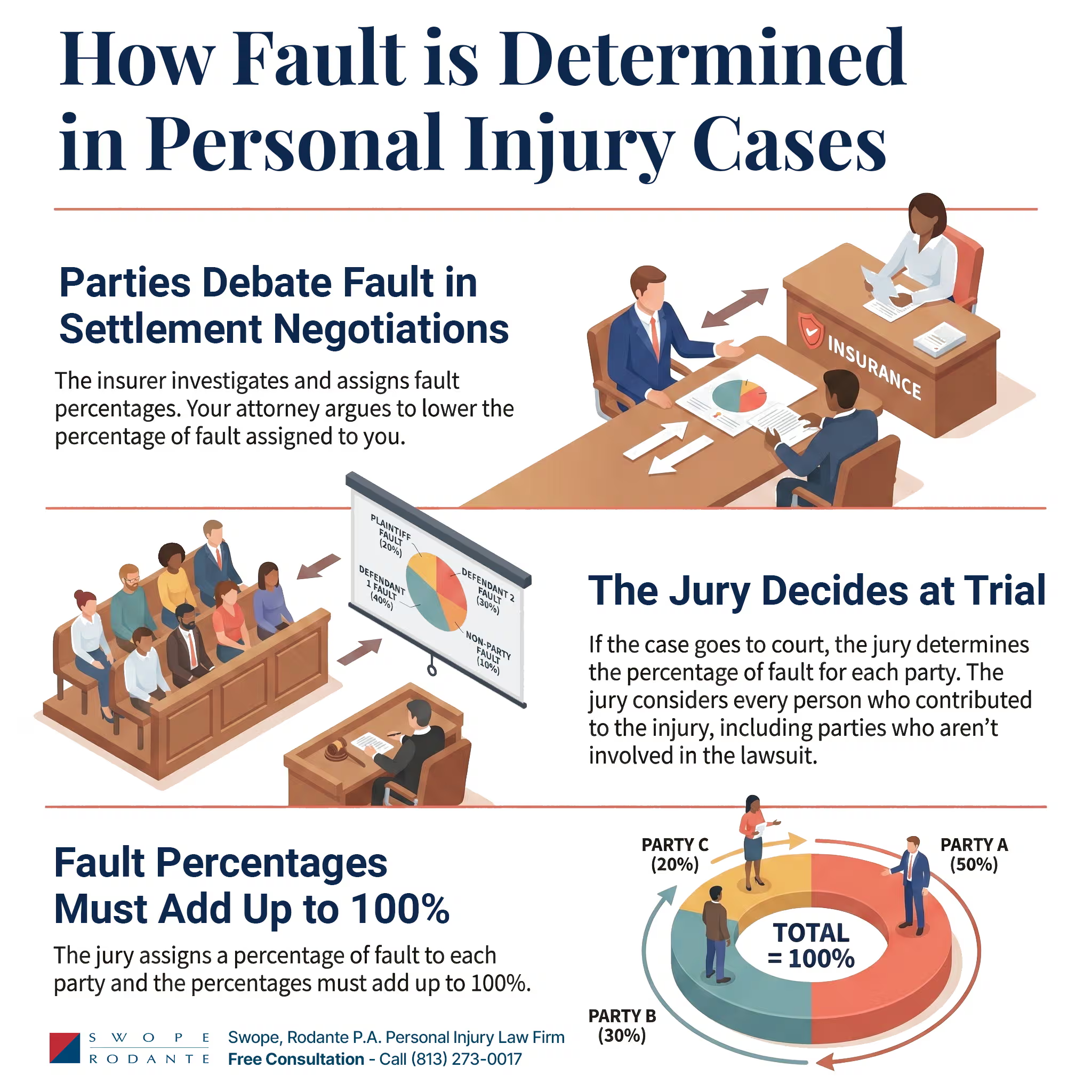 In settlement negotiations, fault is argued between your attorney and the insurance company. The insurer will conduct its own investigation and assign fault percentages. Your attorney’s job is to counter that assessment with evidence supporting a lower percentage of fault for you. No formal adjudication occurs unless the case goes to court.
At trial, the jury determines fault percentages for all parties involved. Florida law requires the jury to consider the fault of every person who contributed to the injury, including parties who may not be named as defendants in the lawsuit. The jury assigns a percentage to each party, and those percentages must total 100%. Learn more about how a jury trial works in Florida.
Evidence that plays a role in fault determination includes police reports, eyewitness testimony, accident reconstruction analysis, traffic camera or dashcam footage, vehicle damage patterns, road and weather conditions, toxicology reports, cell phone records showing distraction, and whether applicable traffic laws were violated.
Under the new system, the quality of this evidence matters more than ever. The difference between a 49% and a 51% fault finding is not a slight reduction in compensation — it is the difference between receiving damages and receiving nothing. Car accident reports are public record in Florida and obtaining them quickly is part of building a strong evidentiary case.
Gathering Evidence at the Accident Scene to Avoid Being Blamed for the Crash
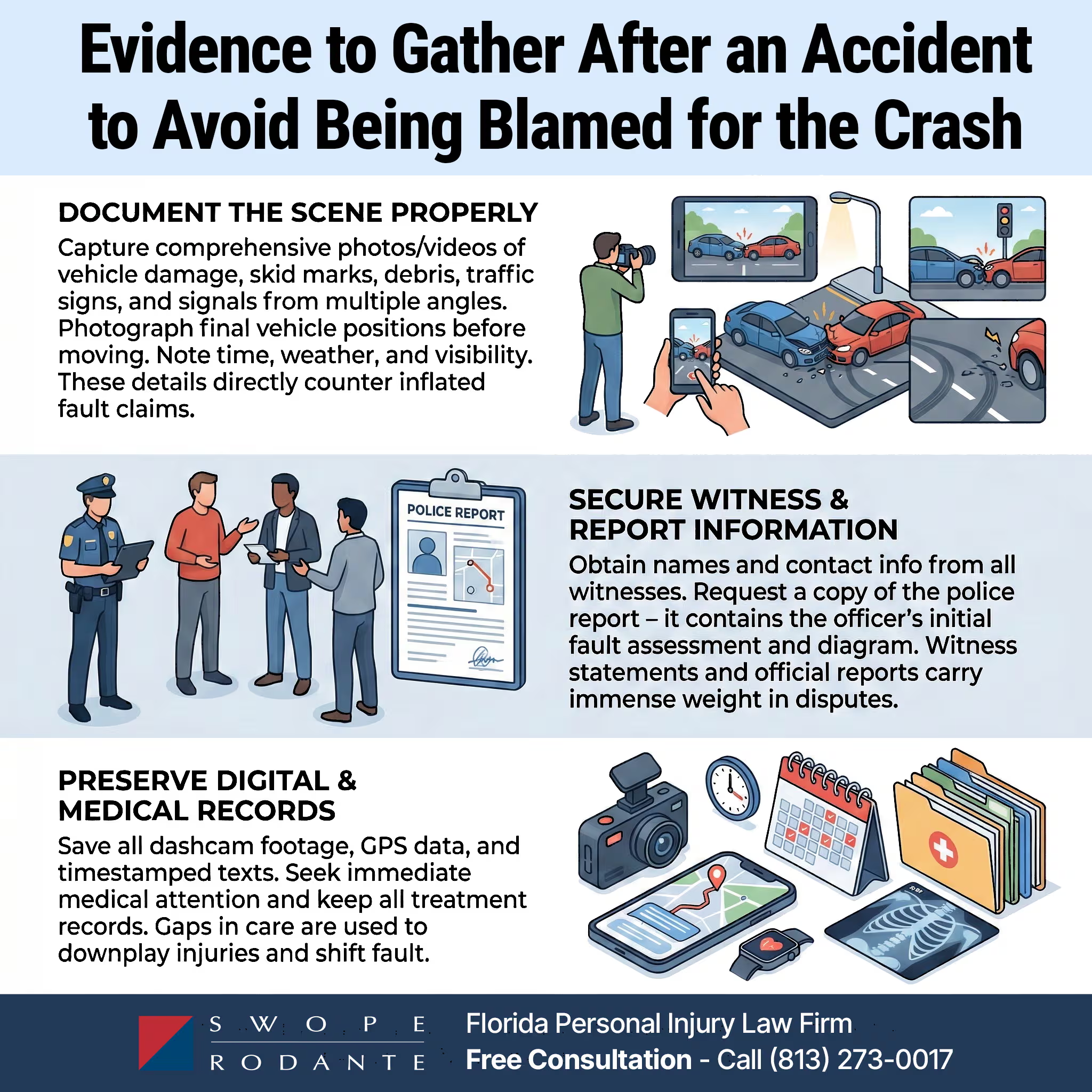 Under pure comparative negligence, evidence of the other party’s fault affected how much you recovered. Under modified comparative negligence, it determines whether you recover at all. This makes early evidence preservation critical.
Steps to take immediately after an accident include documenting the scene with photographs and video from multiple angles, obtaining contact information from witnesses, requesting copies of any available surveillance or traffic camera footage before it is overwritten (many systems automatically delete footage within days or weeks), preserving your own vehicle without making repairs until it has been inspected, obtaining the official police report, and keeping detailed records of your injuries, treatment, and how the accident has affected your daily life. Our guide on what to do after a car accident in Florida covers these steps in detail.
An experienced attorney can also retain accident reconstruction experts, obtain cell phone records and vehicle data (such as event data recorder information), and subpoena evidence that might otherwise be lost. The sooner this process begins, the stronger your position in any fault dispute.
Frequently Asked Questions
Can I still recover compensation if I was partially at fault? Yes — as long as your share of the fault is 50% or less. Your compensation will be reduced by your fault percentage. If you are found 51% or more at fault, you cannot recover any damages.
Who decides what percentage of fault I bear? During settlement negotiations, the insurance company proposes fault percentages, which your attorney can dispute. If the case goes to trial, the jury makes the final determination based on the evidence presented.
Does the 51% rule apply to car accidents? Yes. It applies to virtually all negligence-based personal injury claims in Florida, including car, truck, motorcycle, bicycle, and pedestrian accidents, as well as slip and falls and premises liability cases. The only exception is medical malpractice, which still follows the pure comparative negligence standard.
What if the insurance company is unfairly blaming me? Insurance companies have a financial incentive to assign you as much fault as possible, especially now that crossing the 51% threshold eliminates their obligation entirely. A Tampa personal injury attorney experienced in Florida comparative negligence law can challenge unfair fault allocations by presenting contradictory evidence, retaining experts, and preparing your case for trial if necessary.
Does my fault percentage affect my PIP benefits? No. PIP is no-fault insurance — it pays regardless of who caused the accident. Comparative negligence comes into play when you step outside the no-fault system and pursue a liability claim against the at-fault driver for damages beyond what PIP covers.
What if there are more than two parties involved? The jury assigns fault percentages to all parties who contributed to the injury, and those percentages must add up to 100%. Your recovery is reduced by your own fault percentage, and you are barred from recovery if your percentage exceeds 50%. The fault percentages of the other parties are allocated among them, but you can only collect from those you have named as defendants or who carry applicable insurance.
Contact Swope, Rodante, Newsome & Steinberg
Florida’s shift to modified comparative negligence means that fault allocation is now the single most important factor in many personal injury cases. Insurance companies are using the 51% threshold to deny and devalue claims, and the stakes of getting the fault determination right have never been higher.
At Swope, Rodante, Newsome & Steinberg, we have the resources, experience, and trial record to fight back against unfair fault assignments. If you’ve been injured in an accident and are concerned about how comparative negligence may affect your claim, contact us for a free case evaluation. We work on a contingency fee basis.